Background
Watermarks – Three Letters from China
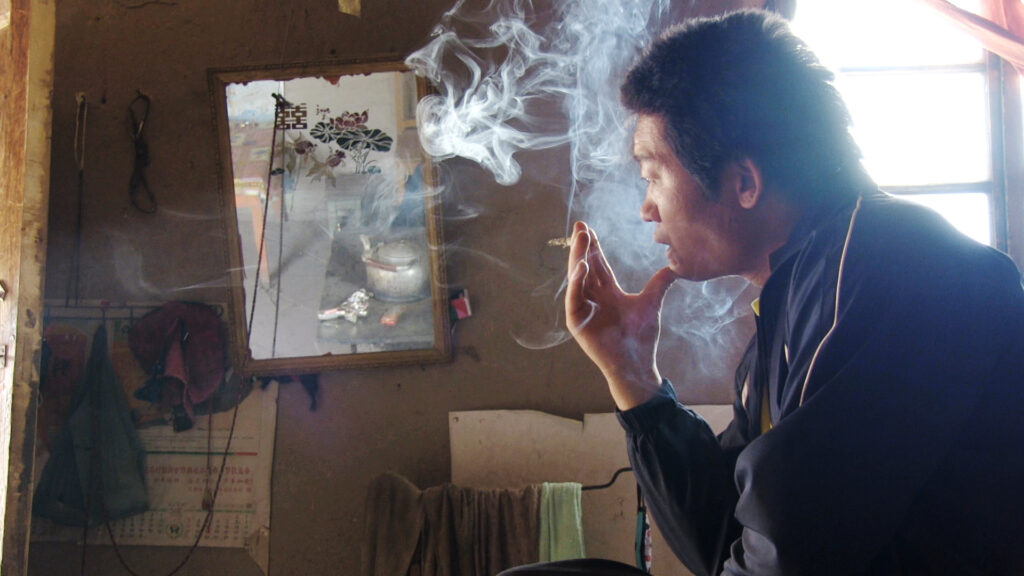
Watermarks (2013)
REFLECTIONS OF THE DIRECTOR
«Since the crushing of the democracy movement in 1989, I have followed the upheaval in China with equal parts amazement and irritation: the country looks like a huge construction site and seems to be involved in a precipitous search for itself. In this unstable present the protagonists are taking tentative but courageous steps into the future.»
«During the research for «Watermarks» and the subsequent filming in China I kept returning to a topic that had preoccupied me in my earlier films: namely, how people respond to external events, ruptures and life changes, and what this means to them in their daily lives. I took this question to heart in my new film and continued my search for answers.»
Luc Schaedler
MY RELATIONSHIP TO CHINA
My relationship with China began over 20 years ago. Since the crushing of the democracy movement in 1989, I have travelled repeatedly through China. I have followed China’s economic development and the associated political and social upheavals with equal parts amazement and irritation.
The social changes triggered by fast-paced economic development unsettled the people. They registered the growing pollution of the environment and water with concern. Entire landscapes as well as a part of their own family history and the cultural history of China were punctiliously ‘flooded’ by progress. My love-hate relationship with China is reflected in the ambivalence of many Chinese, who are simultaneously proud of and disconcerted by developments in their country. These are the contradictory feelings that I have attempted to capture in my film.
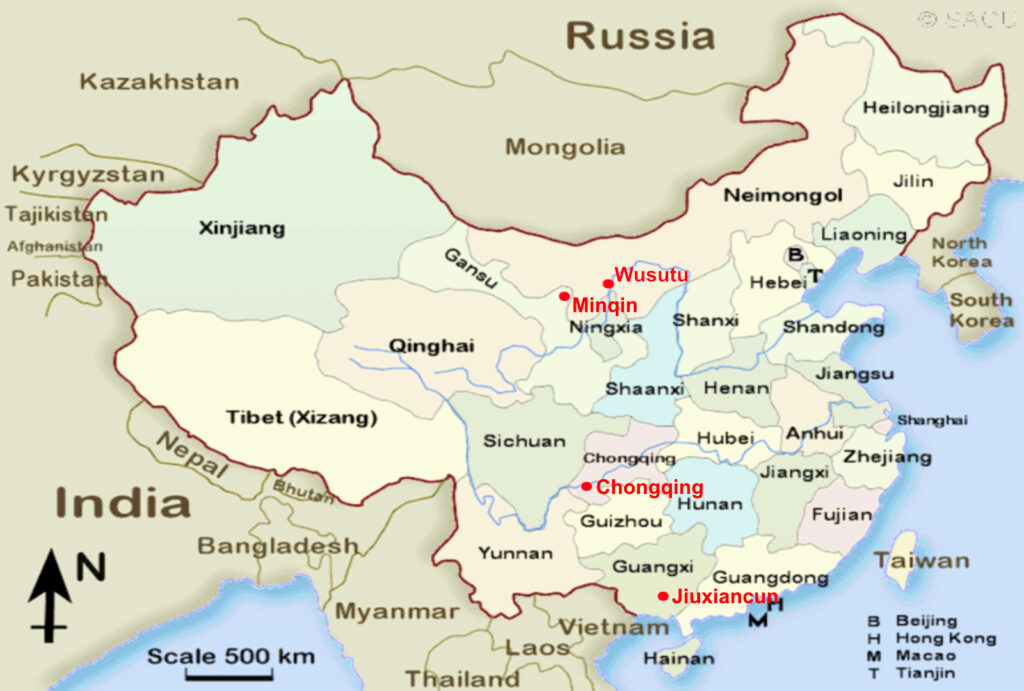
Four shooting locations
Collaboration
In the project an old friend (anonymous) was responsible for the interviews with the protagonists as well as sound. To complete the research (2009/2010) and filming (2011), we travelled together for months through China and shared in the everyday lives of the protagonists. His relationship to the people grew out of his quiet ease and the fact that he speaks fluent Chinese. This brought him a great deal of respect. He was simultaneously an insider and an outsider. I was the stranger, as well as being more extroverted and louder. I had to build my relationship with the people through non-verbal means, by gestures and looks.
In a cultural and political situation which treats the spoken word with caution and relegates most things to the deeper level of trust, we complemented each other ideally. My friend studied Sinology and ethnology in Zurich and China. For over 12 years he has lived and worked in Beijing and Shanghai. He is married to a Chinese woman. We have been friends since the Zurich youth riots of the early 1980s.
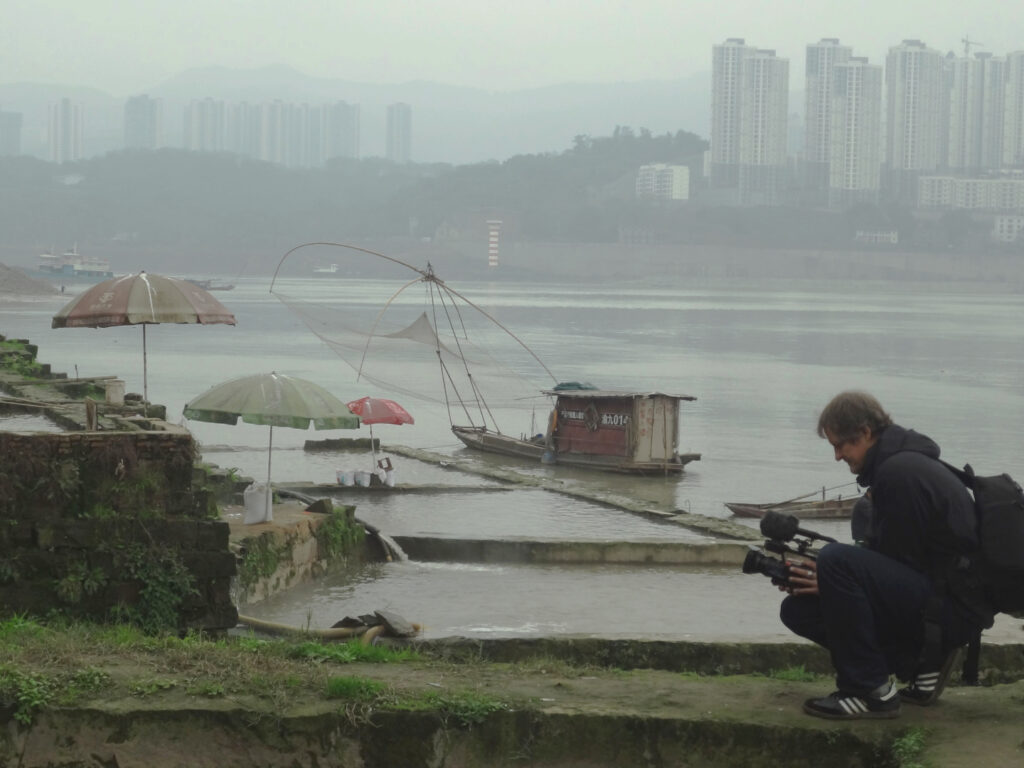
Our working method
In China it makes sense to comport oneself like water. Wherever it flows, one lets it go, and wherever it is dammed, one gives way to it and finds another route. In this sense, time and patience are very important factors. What appears to be obvious whenever one works with people in a film turns out to be doubly important in China, for cultural and political reasons.
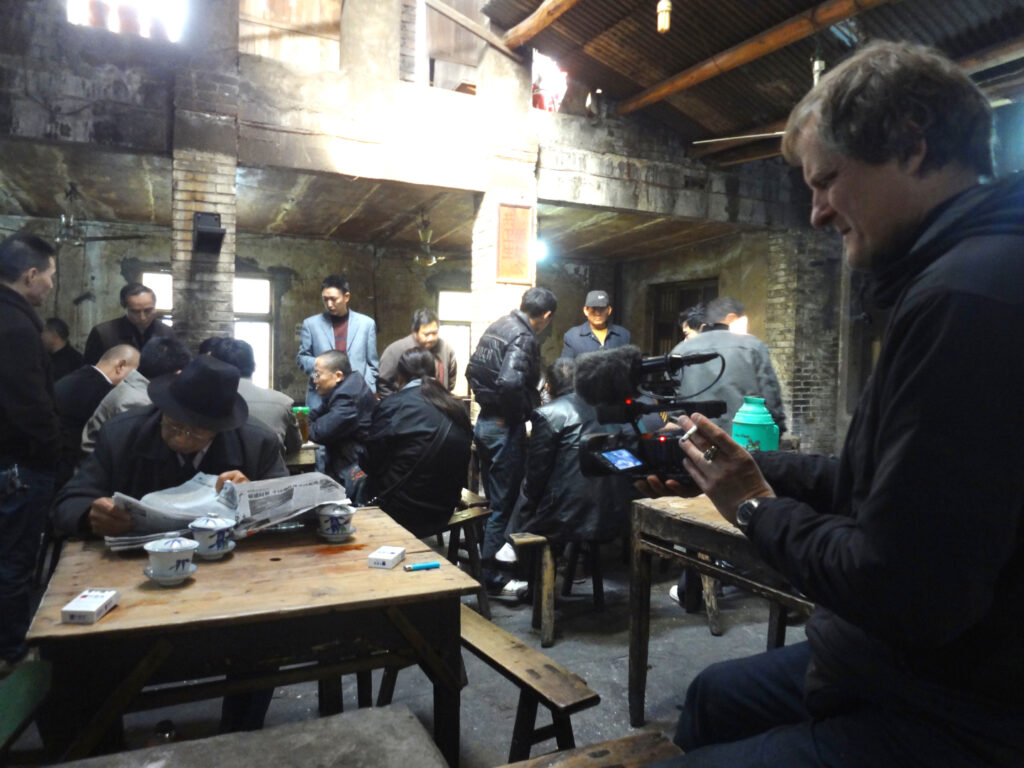
In China, if you want to get close to the people, you have to give yourself a lot of time. It is a complicated but not unpleasant ritual, during which you spend weeks building up trust, step by step: a first conversation, a second one, drinking tea, smoking, chatting, eating together, slowly getting to the point and always coming back to another toast. The first contact, and how you behave at that point, is crucial.
SHOOTING LOCATIONS
Water is the visually binding element in the film. Like a river, it flows through the individual scenes, stories and interviews.
MINQIN – Gansu Province
WUSUTU – Inner Mongolia
Both cities feature in Watermarks. They lie in the gigantic coal and industry belt that stretches for over 1000 kilometres west to east across northern China. In addition to the destructive exploitation of the landscape this region suffers from severe pollution and water scarcity. Despite all that – or because of it – both places were one of the most fascinating shooting locations I have ever worked at.
JIUXIANCUN – Guangxi Province
A small rice-growing village that dates back to the time of the Qing Dynasty (1616-1912). It is situated in the south of China, not far from the tourist-centre of Yangshuo, where rain is plentiful. The region is known for its iconographic landscape, consisting of innumerable karst hills rising above the rice fields. In no other province did the Cultural Revolution (1966-1976) rage with such devastating force as in Guangxi.
CHONGQING
A booming mega-city on the Yangtze, the largest river in China. With over 30 million inhabitants, it is currently one of the most populous cities in the world. In recent years, it has grown with greater intensity and the city is in a constant state of upheaval.
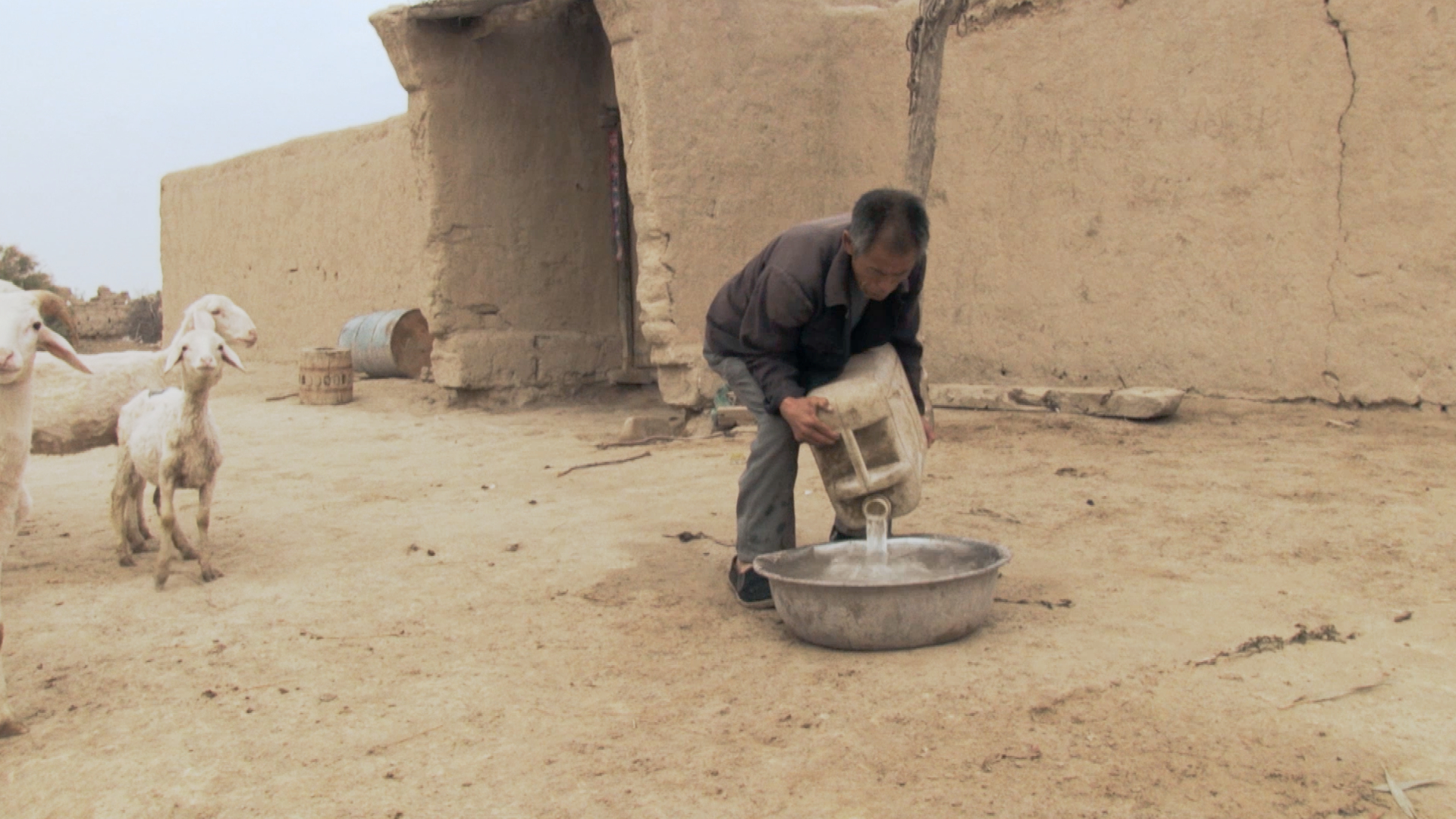
Minqin, gansu Province
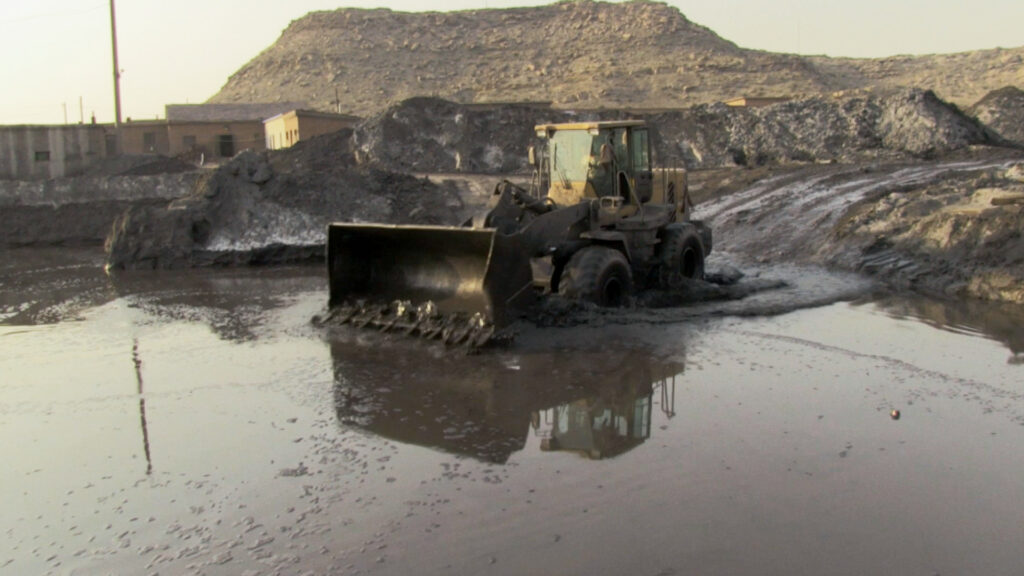
Wusutu, Inner Mongolia
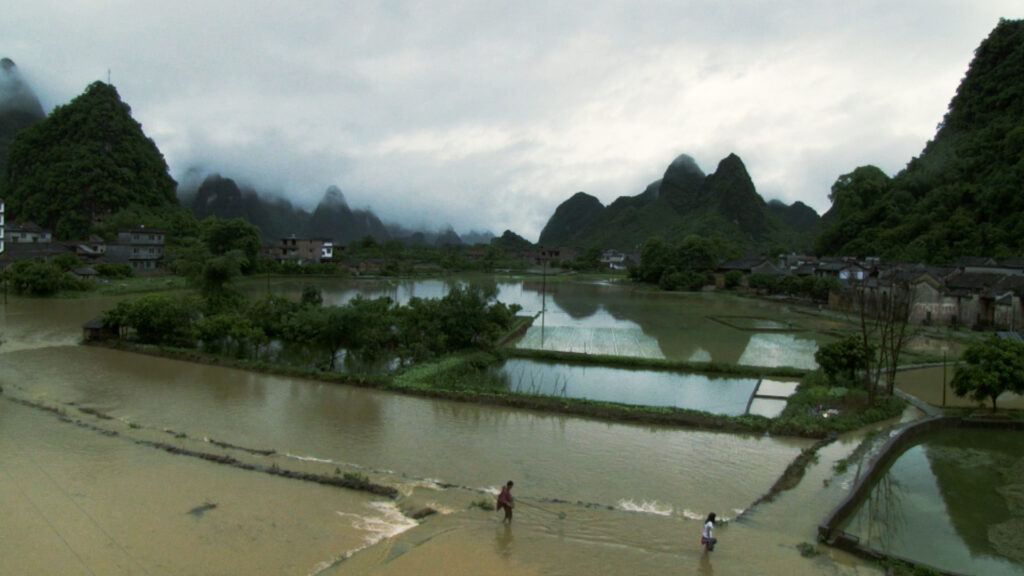
Jiuxiancun, Guangxi Province
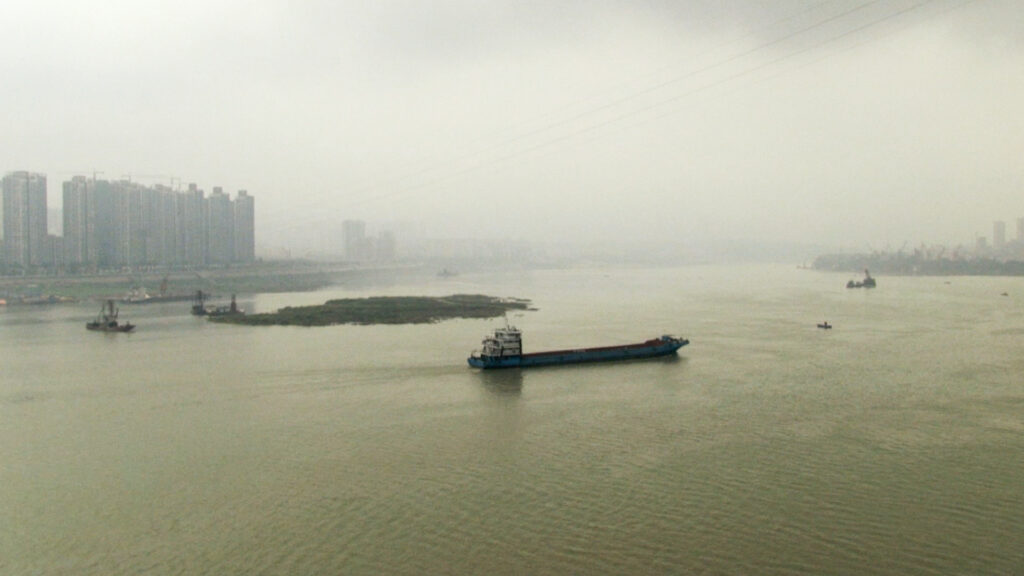
Chongqing