Gendun Choephel
Angry Monk – Reflections on Tibet
- → Short bioghraphy (1903-51)
- → Four texts of Gendun Choephel
- → The jewel in the lotus
- → Paintings & scetches

Gendun Choephel (1936)
SHORT BIOGRAPHY
Childhood in Eastern Tibet
1903-1927
Gendun Choephel (Chopel, Chöphel) was born 1903 in a small village in eastern Tibet, near the silk road, at the Chinese border, in a remote region populated by nomads. This region was inhabited by Muslims, Chinese and Tibetans that were constantly fighting each other. The villages often were attacked and looted by warlords.
In this explosive and mixed cultural climate Gendun Choephel started to be interested in his Tibetan identity early on. He received a traditional education as a monk in the most important monastery of the region, where he developped a friendship with an American missionary that the other monks and his family resented. In 1927 he left the monastery and moved to Lhasa with a caravan of merchants.

Labrang Monastery (1920)
Monastic education in Lhasa
1927-1934
In Lhasa Gendun Choephel studied in Drepung, the biggest monastery in the world. His rebellious attempts to bypass the monastery’s rules annoyed the other monks. Ultimately, monastic life suffocated him too much in Lhasa as well and he left the monastery. Afterwards he survived as a portrait painter and artist for rich aristocrats in Lhasa. In 1934 he met Rahul Sankrityayan, an Indian researcher of Buddhist teachings who also was a communist activist for the Indian struggle for independence from British colonialists.
Journey across Tibet
1934-1938
Rahul Sankrityayan and Gendun Choephel travelled together across Tibet searching for old texts that were destroyed in India centuries earlier but had survived in remote monasteries in Tibet. For Rahul, historical research is part of his political fight; for him researching history is the key to the present. Gendun Choephel was Rahuls translator as well as his mediator for Tibetan culture. At the same time the fascinating stories about India awoke his curiosity.

Gendun Choephel (l.), 1938
Research and pilgrimage journey through India
1938-1946
In India, Gendun Choephel was confronted with a foreign world. For the first time he saw a railway and other technological achievements. India was then undergoing radical changes and, contrary to Tibet, the Indians took their destiny into their own hands. The fight for independece was at its peak. Gendun Choephel’s view of his own culture started to change; in India he experienced the most creative phase of his life.
He travelled across the country as a Buddhist pilgrim, lived in the crowded city of Calcutta, saw the ocean, visited brothels and libraries, wrote his first newspaper articles and translated the Kamasutra in Tibetan, enriching it with his own experiences. He sent many of his writings, notes and sketches back to Tibet in order to convey his impressions of a foreign world.

Gendun Choephel (m.), India
Return to Tibet
1946-51
In 1946 Gendun Choephel returned to Tibet passing through the Indian-Tibetan border town of Kalimpong which, next to British and Chinese agents, was a nest of radical Tibetans who fell out of grace with Lhasa’s government. In 1939 they founded the Tibetan Revolutionary Party. Choephel got acquainted with the party and designed their logo: a sickle crossed by a sword. The Tibetan Revolutionary Party’s goal was to overthrow the tyrannical regime in Lhasa.
Arrest in Lhasa
1946
When Gendun Choephel arrived in Lhasa the Tibetan government was already informed about his political activities. He began to write the political history of Tibet but this attempt was abruptly stopped by his arrest. He was accused of insurrection and thrown in jail for three years.
In 1949 he was freed. But his heart was broken and he drowned his desperation in alcohol. Soon afterwards the Chinese army overran the Tibetan troops in eastern Tibet and, in 1951, shortly after the occupation of Lhasa by the Chinese army, Gendun Choephel died. Supposedly he commented on the political events of his era in this way: «Now we are in deep shit!»

Shortly before his death, 1951
FOUR TEXTS OF GENDUN CHOEPHEL
On British colonialism
Gendun Choephel, Calcutta 1941
Sponsored by kings and ministers
the colonialists sent out
a great army of bandits,
calling them traders.
They introduced
new forms of living,
but their laws
were only good
for the educated and wealthy.
As for the poor,
their small livelihoods
are sucked like blood
from all their orifices.
It is in this way
that the so-called wonders
of the world were built,
such as railroads and high buildings.
I am an astute beggar,
who spent his life listening.
I know what I’m talking about.
From his notebook
Gendun Choephel, Tibet 1946
In Tibet
Everything that is old
Is a work of Buddha
And everything that is new
Is a work of the Devil
This is the sad tradition of our country
Is the world flat?
Article in «Tibet Mirror»
Gendun Choephel, Kalimpong 1938
In olden days,
even in Europe,
the world was thought to be flat.
And when some intelligent people
claimed the opposite,
they were exposed to various difficulties,
such as being burnt alive.
Today, even in Buddhist countries
everybody knows,
that the world is round.
However in Tibet,
we still stubbornly state
that the world is flat.
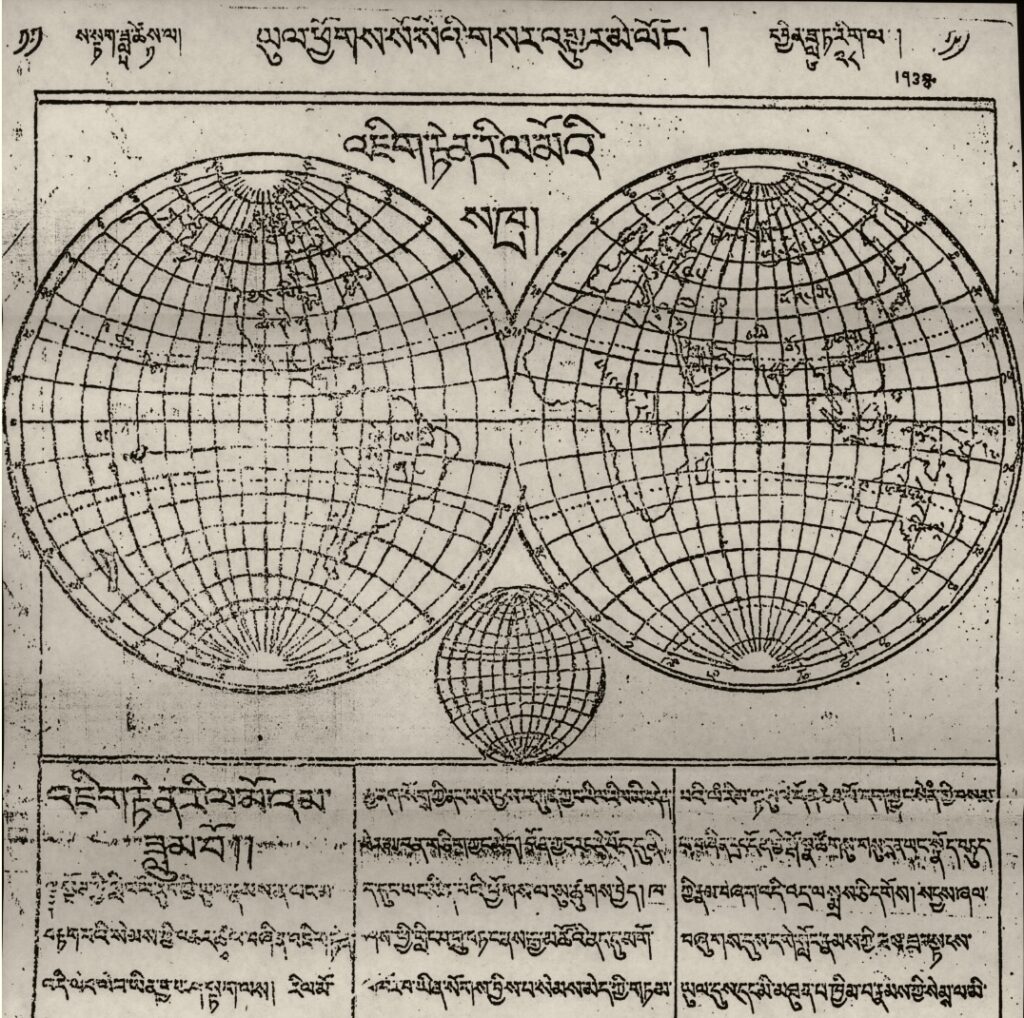
Tibet Mirror, 1938
«Is the world flat?», Article excerpt
Foreword to his «Kamasutra» translation
Gendun Choephel, Calcutta 1939
As for me
I have little shame
I love women.
Every man has a woman
Every woman has a man
Both in their mind
Desire sexual union
What chance is the for clean behaviour?
If natural passions are openly banned
Unnatural passions will grow in secrecy
No law of religion
No law of morality
Can suppress the natural passion of mankind

Excerpt from an old Tibetan text
JUWEL IN THE LOTUS
Even as a child, and later at Labrang Monastery (1925), Gendun Choephel built mechanical toys and demonstrated them to the astonished monks. Among them were a small steam-powered metal boat (according to oral tradition) and a lotus flower fitted with a screw mechanism that opened the petals to reveal a small golden Buddha statue (in the possession of his relatives). The phrase “the jewel in the lotus” serves as a poetic synonym for “enlightenment.”


PAINTINGS & SKETCHES
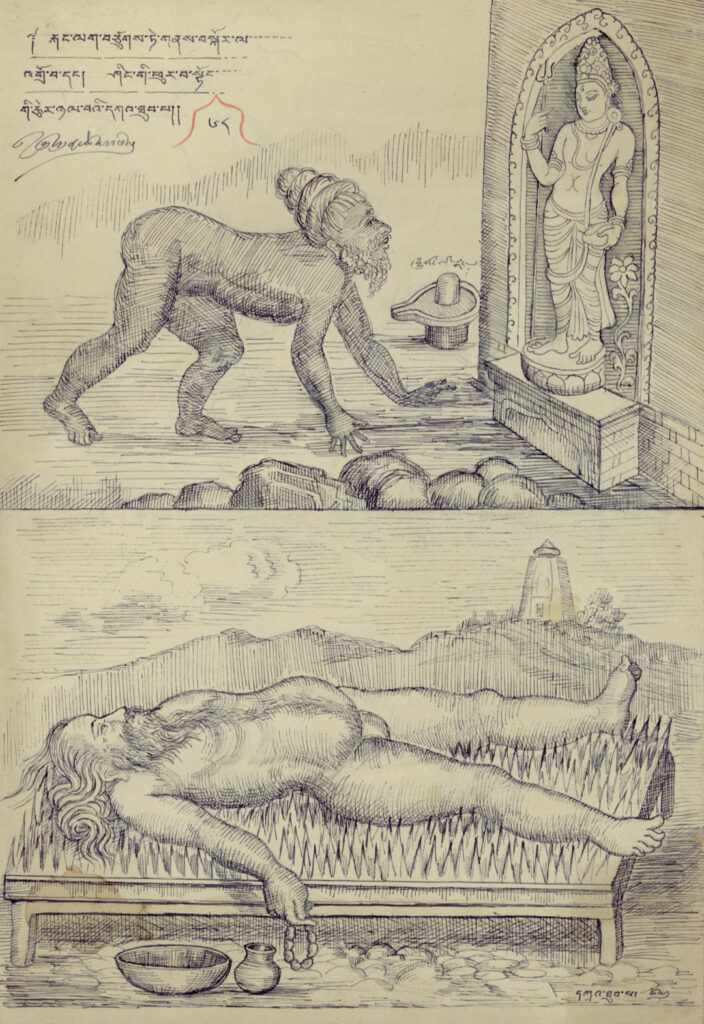
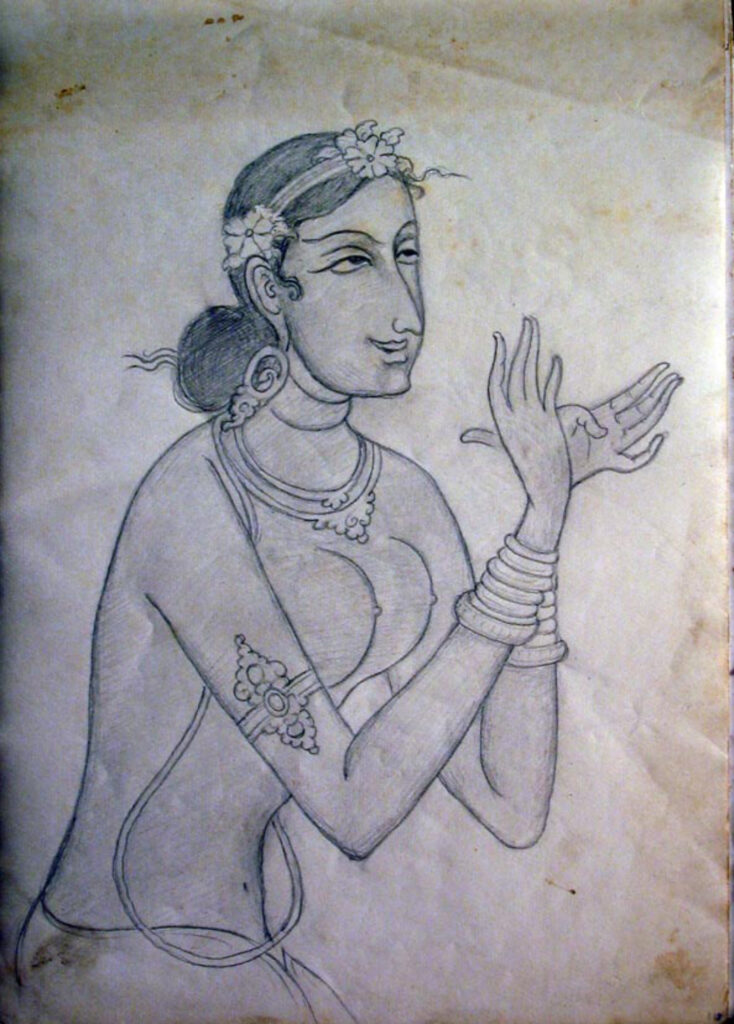
A selection of paintings, sketches and drawings by Gendun Choephel. They all date from the years he spent in India, between 1938 and 1946. For a long time his artistic works were thought to be lost. It was not until the early 2000s that they resurfaced in Tibet and were brought to the United States. For many years they had been kept hidden from the Red Guards during the Cultural Revolution (1966–76).


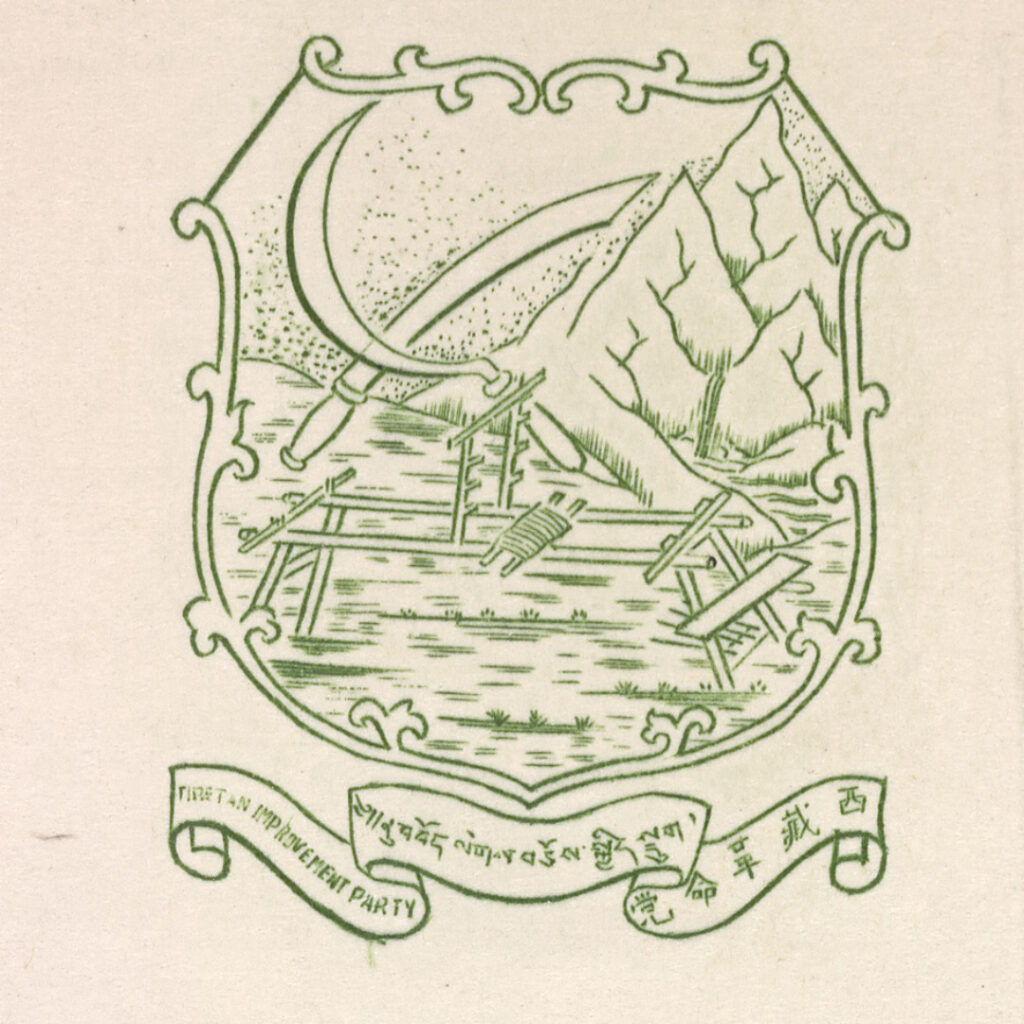
Logo of the «Tibetan Improvement Party» by Gendun Choephel, 1940’s

Sketch of the train system in India by Gendun Choephel, 1940’s